

Committee
2026
Chair
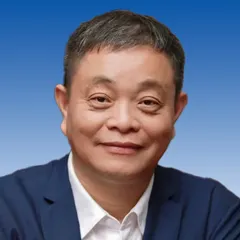
Prof. Xin-Gao Gong
Fudan University, China
Prof. Dr. Xin-Gao Gong is a distinguished physicist specializing in computational physical sciences and condensed matter physics. As a member of the Chinese Academy of Sciences, he has made pioneering contributions to the development of theoretical and computational methodologies that have significantly advanced the understanding of complex material systems. His research has played a key role in shaping computational physical sciences and deeply influenced materials theory and simulation.
Members
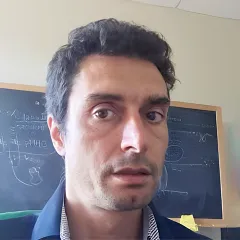
Prof. Alessandro Laio
Scuola Internazionale Superiore di Studi Avanzati, Italy
Prof. Alessandro Laio is a leading researcher in computational physics and statistical mechanics. His research focuses on the development of analysis techniques for complex data landscapes, and to the development of algorithms for enhancing the capability of computer simulations to provide predictive answers for complex heterogeneous systems. He is widely recognized for co-developing metadynamics, a groundbreaking atomistic simulation technique that has become a powerful tool in computational physics, chemistry, materials science, and biology.
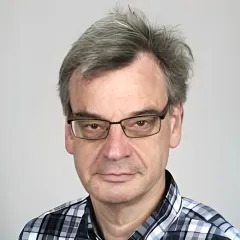
Prof. Michiel Sprik
University of Cambridge, UK
Prof. Michiel Sprik is a renowned researcher in theoretical chemistry and materials modeling. His research physical chemistry of electrochemical interfaces, combining atomistic simulations, statistical mechanics, and thermodynamic theory to understand energy conversion processes and the behavior of complex materials systems. His contributions have advanced the fundamental understanding of electrochemical and energy-related materials.
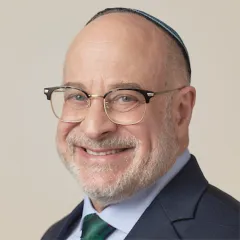
Prof. David J. Srolovitz
The University of Hong Kong, China
Prof. David J. Srolovitz is the Chair Professor of Materials Theory and Dean of Engineering at the University of Hong Kong. His research spans materials theory and computational materials science, with interests in defects, interfaces, microstructural evolution, mechanical deformation, radiation effects, and advanced simulation methods for emerging materials systems. He has authored more than 500 scientific publications and received numerous honors, including the Materials Theory Award from the Materials Research Society.
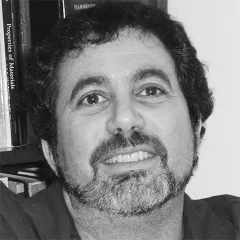
Prof. Mark E. Tuckerman
New York University, USA
Prof. Mark E. Tuckerman is an internationally recognized expert in theoretical and computational chemistry. His research centers on molecular dynamics, free-energy methods, molecular crystal structure prediction, and machine learning applications in chemical and materials sciences. He is widely known for pioneering advances in molecular and path integral simulations and computational methods for complex molecular systems.
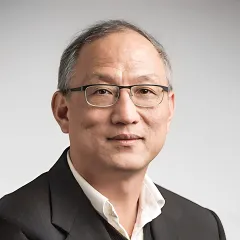
Prof. Su-Huai Wei
Eastern Institute of Technology, Ningbo, China
Prof. Su-Huai Wei is a distinguished scientist in computational materials science and electronic-structure theory. His research specializes in the first-principles calculation of electronic structures and the exploration of optoelectronic, magnetic, and energy-related properties of semiconductors, nanomaterials, and emerging functional materials. His work has made significant contributions to the understanding and design of advanced materials for energy and electronic applications.
Note: The 2026 Award Committee comprises six members, including one anonymous member.